곁
the warmth of someone beside you
A Word That Means “Beside You”
곁 (gyeot) is, at its core, a spatial word. It means the area right next to someone — their side, their vicinity. In a dictionary, it’s as plain as the English word “beside.”
But Koreans reach for this word in moments that are anything but plain. 곁에 있어 줘 (gyeote isseo jwo) — “stay at my side” — is what you say when you need someone’s presence more than their words. 곁을 지키다 (gyeoteul jikida) — “to keep someone’s side” — is how you describe the kind of loyalty that shows up not in grand gestures but in simply not leaving. The word itself is neutral. The moments where Koreans choose to use it are not.
A parent sitting next to a child who’s too young to remember it but will somehow carry it anyway. A friend who shows up and says nothing because nothing needs to be said. Someone who stays.
More Than Standing Nearby
In a culture where companionship is often expressed through actions rather than words — sharing food, walking together in silence, simply being there — 곁 is the word that marks where that closeness happens. It shows up in song lyrics, in film dialogue, in the quiet promise of 네 곁에 있을게 (ne gyeote isseulge) — “I’ll be at your side.”
곁 names a physical space. But in Korean, that space is never just physical. To be at someone’s 곁 is to have chosen to be there — and to stay.
Why We Made This Design
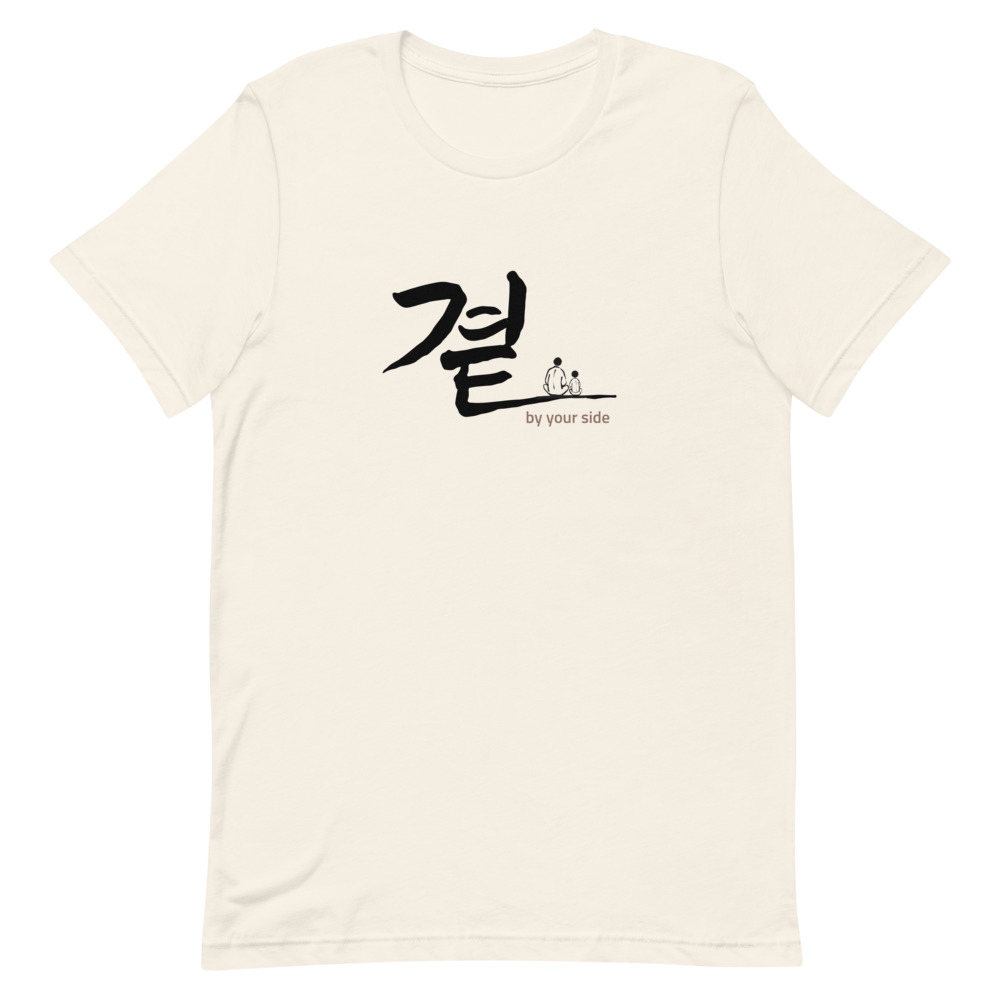
This design was inspired by the Korean film 왕과 사는 남자 (The King’s Warden). A local administrator petitions to receive a young exile, expecting fortune — and discovers a young man who has lost everything and needs someone to simply be there. Over shared meals and quiet days, two people from opposite ends of the world learn what it means to stay at each other’s side. The film’s Korean title says it all: not “the man who serves the king” but “the man who lives with the king.” Living with. Being at someone’s 곁.
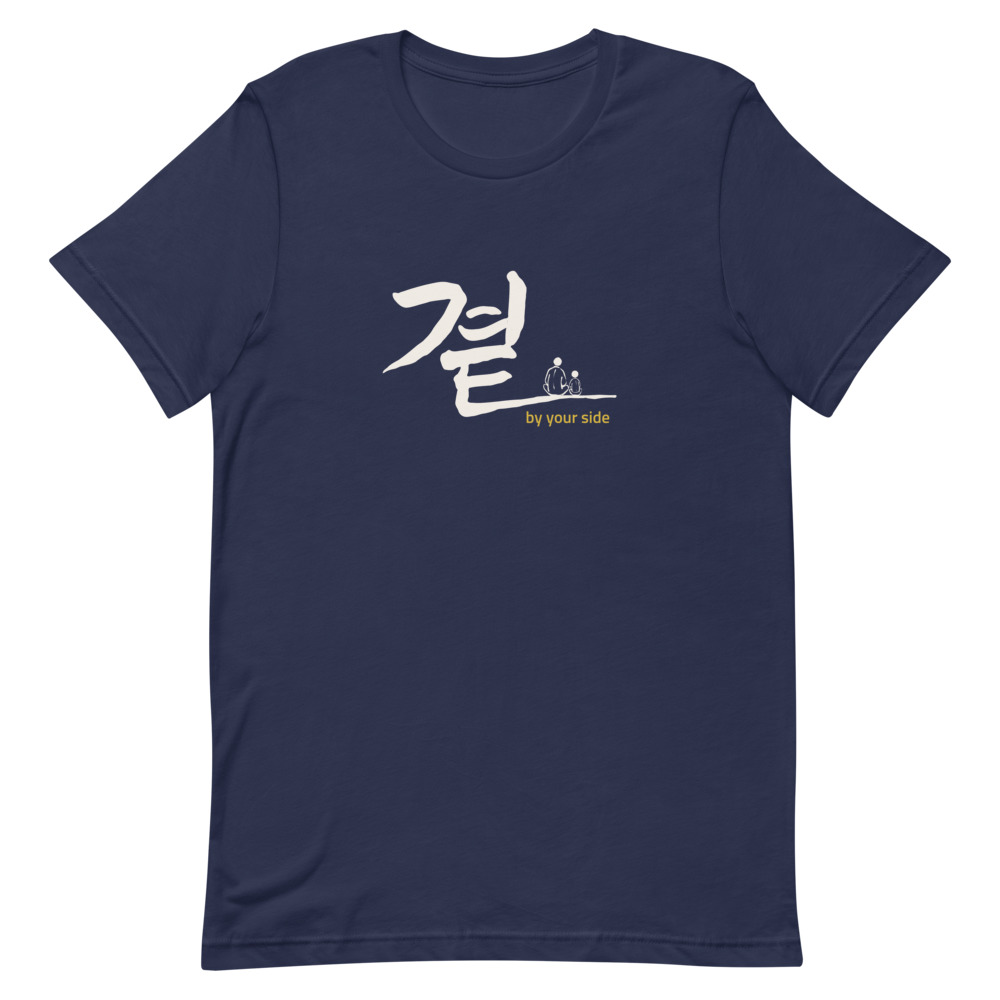
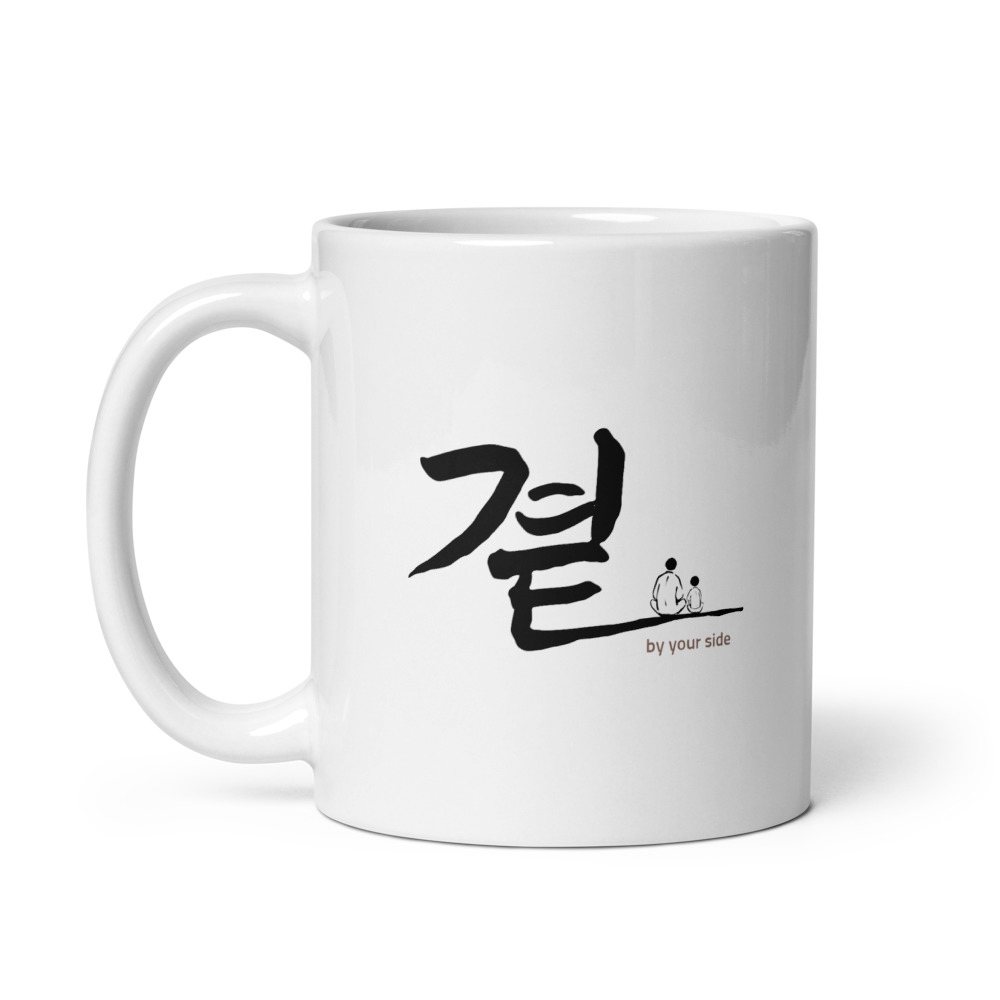
The ink wash illustration shows two figures from behind, sitting together and looking at something we can’t see. What matters isn’t what’s ahead of them. It’s that they’re side by side. The brushstroke style pays homage to traditional Korean ink painting (수묵화, sumukhwa), where what’s left unsaid matters as much as what’s drawn.
Wear the Word
You Might Also Like